Connect

Here are  some links to  resources and  information about migrants and refugees that we find useful and/or interesting, and to groups/agencies/NGOs working with migrants  and refugees in the Mediterranean region.

Please send us further relevant links and please feel free to connect our website to your own.

Featured projects:
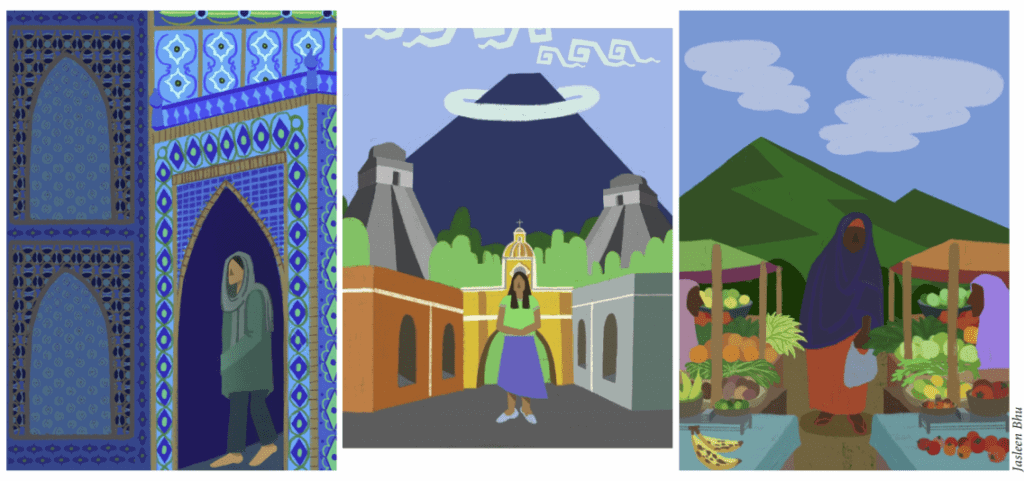
Climate Refugee Teaching Activity

For an example of how the stories on the Migrant Child Storytelling site can be used in classrooms or workshops to teach about migration, read about and download this free lesson from the Zinn Education Project.

In this role play, based on the stories of six young people whose lives have been changed by the climate refugee crisis, students try to imagine what it is like for a person to have “no option except escape.” The role play is based on the lives of real people. Two of the roles are inspired by stories from the Migrant Child Storytelling site.

Click here to learn more about the project.
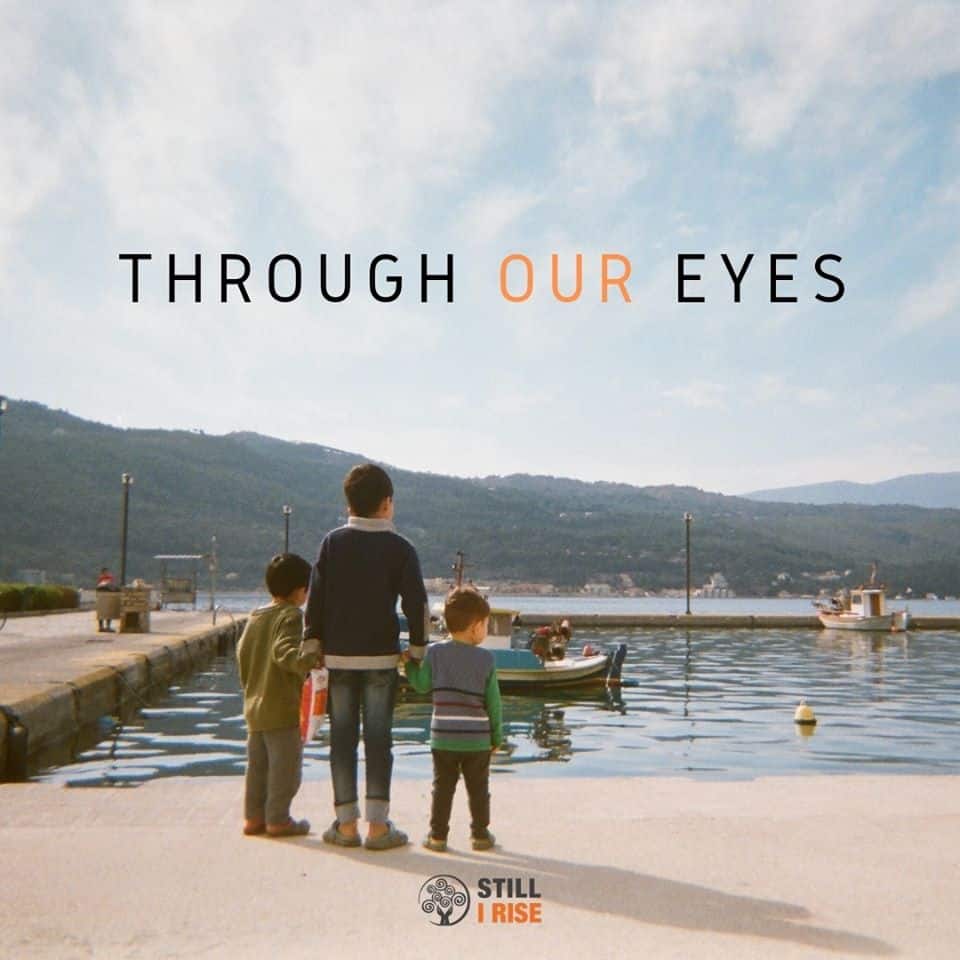
Through our eyes

A photography project that shows the daily lives of young asylum seekers living in the ‘hotspot’ camp on Samos Island, Greece, through their own eyes.

The young photographers are students at the Mazi youth center, run by the NGO Still I Rise. Mazi provides informal education and psychosocial support for children aged 12 to 17 living in the camp.

See the full exhibit here

Accoglierete

Accoglierete is an association based in Syracuse, Sicily that supports unaccompanied migrant children  arriving in Sicily. They provide cultural mediation, legal support in the form of Legal guardians to represent the child in the judicial system, psychological support and family connection among other activities.

Facebook page here: https://www.facebook.com/AccoglieRete/


The nature photography project

The Migrantchild storytelling project has inspired other forms of storytelling using  cameras. For example nature storytelling projects have been conducted in both the UK and Guatemala. These projects aim to connect children more closely to the their natural environment through  exploration, photography and storytelling. More information here: https://journals.lww.com/invn/fulltext/2022/20010/the_nature_photography_project__a_creative.15.aspx

Examples of the children’s work can be seen here. These pictures were taken by children at San Martin  Jilotepeque in Guatemala in July 2025

And these were taken by children at Ludgvan school in Cornwall in september 2025

The Migrant Diaries

Lynne Jones blog  describes her experiences of working with migrants in Mexico, Italy, France and Greece, including setting up and running the story telling workshops.

Click the links to read more about working with migrant children in Mexico 2017 or France 2017.

More stories and photographs collected here: https://www.refugepress.com/books/the-migrant-diaries


Climate Refugee Teaching Activity

For an example of how the stories on the Migrant Child Storytelling site can be used in classrooms or workshops to teach about migration, read about and download this free lesson from the Zinn Education Project.

In this role play, based on the stories of six young people whose lives have been changed by the climate refugee crisis, students try to imagine what it is like for a person to have “no option except escape.” The role play is based on the lives of real people. Two of the roles are inspired by stories from the Migrant Child Storytelling site.

Click here to learn more about the project.

MISSING MIGRANTS PROJECT

The International Organization for Migration (IOM)’s Missing Migrants Project records incidents in which migrants, including refugees and asylum-seekers, have died at state borders or in the process of migrating to an international destination. It was developed in response to disparate reports of people dying or disappearing along migratory routes around the world, and particularly in the wake of two shipwrecks in October 2013, when at least 368 people died near the Italian island of Lampedusa. The Project hosts the only existing open-access database of records of deaths during migration on the global level. These data are used to inform the Sustainable Development Goals Indicator 10.7.3 on the “[n]umber of people who died or disappeared in the process of migration towards an international destination.” Missing Migrants Project is also a concerted effort towards informing the Global Compact on Migration’s Objective 8, which commits signatory states to “save lives and establish coordinated international efforts on missing migrants.”

Besides the database, the Project publishes reports, briefings and infographics (available on the Publications page) with analysis of the data by geographic region, risks on irregular migration routes, issues related to the identification of missing migrants, the challenges and coping mechanisms of families of missing migrants and data collection methodology. Information that could help those looking for missing migrants is available on the Resources for Families page. The Missing Migrants Project is based at IOM’s Global Migration Data Analysis Centre (GMDAC). The Project’s data is licensed under a Creative Commons Attribution 4.0 International License. This means that Missing Migrants Project data and publications are free to share and adapt, as long as the appropriate attribution is given. This includes, at minimum, stating that the source is “IOM’s Missing Migrants Project” and indicating if changes were made to the data. Ideally, a link to this website should also be included.

More than 60,000 people have lost their lives during unsafe migration journeys since 2014. The data collected by Missing Migrants Project bear witness to one of the great political failures of modern times. IOM calls for immediate safe, humane and legal routes for migration. Better data can help inform policies to end migrant deaths and address the needs of families left behind.

“Our message is blunt: migrants are dying who need not. It is time to do more than count the number of deaths. It is time to engage the world to stop this violence against desperate migrants.” IOM Director General William Lacy Swing said in  2014.

Learn more by clicking here

International Organisation for Migration

Established in 1951, IOM is part of the United Nations System and stands as the leading intergovernmental organization in the field of migration.

With 174 member states, a further 8 states holding observer status and offices in 171 countries, IOM is dedicated to promoting humane and orderly migration for the benefit of all. It does so by providing support to migrants across the world, developing effective responses to the shifting dynamics of migration and providing advice on migration policy and practice.

The organization collaborates with governmental, intergovernmental and non-governmental partners to improve the resilience of people on the move, particularly those in situations of vulnerability. It also works closely with governments to manage all forms of mobility, and their impacts. This work includes operations in some of the most complex emergency settings in the world.

The IOM Constitution recognizes the link between migration and economic, social and cultural development, as well as to the right of freedom of movement.

IOM’s work is focused on the following three objectives:

Click to visit their site.

United Nations High Commission for Refugees

‘UNHCR, the UN Refugee Agency works to ensure that everybody has the right to seek asylum and find safe refuge, having fled violence, persecution or war at home.’

‘Since 1950, we have faced multiple crises on multiple continents, and provided vital protection and assistance to refugees, asylum-seekers, internally displaced and stateless people, many of whom have nobody left to turn to. We help to save lives and build better futures for millions forced from home.’

You can follow the links on their website to get up to date information about refugee situations in different countries.

Click to learn more.

UNICEF

UNICEF works around the world to help make sure migrant and refugee children are protected and that their rights are respected.

Children should be safe from violence and be able to grow up with their families. They shouldn’t have to miss school or be scared to visit the doctor. They shouldn’t be discriminated against because of where they come from. They should be able to feel at home – wherever they find themselves and wherever home is.

Children around the world, regardless of where they are from and why they have left their homes, should be treated the same

UNICEF works around the world to help protect the rights of migrant and displaced children. We provide life-saving humanitarian supplies in refugee camps. We run child-friendly spaces – safe places where children on the move can play, where mothers can rest and feed their babies in private, where separated families can reunite. We support national and local governments to put in place laws, policies, systems and services that are inclusive of all children and address the specific needs of migrant and displaced children, helping them thrive.

Click to learn more about UNICEF’s work with uprooted children

Human Rights Watch

HUMAN RIGHTS WATCH is a nonprofit, nongovernmental human rights which publishes reports and briefings on human rights conditions in some 90 countries and advocates  for changes in policy and practice that promote human rights and justice around the world. It covers the issues pertaining to child migrants and refugees extensively.

Click to learn more.

Choose Love

Choose Love Began as Help Refugees in 2015.

Today: “We’re a movement of people who are putting love into action. We get emergency aid and life-changing support directly to displaced communities, fast.

Since we started in 2015, we’ve worked with local partners across 51 countries and raised $160 million to support refugees.

Across the world, over 122 million people have been displaced, almost half of whom are children. Now is more important than ever to support displaced people, and to work together towards a world that chooses love for everyone.”

Click for more information.

Amnesty International

A global movement of more than 7 million people who take injustice personally. It campaigns for a world where human rights are enjoyed by all. Through detailed research and determined campaigning, Amnesty fights abuses of human rights worldwide.  This includes campaigning for the rights of people on the move.

Click if you want to know more.

FXB Center for Health and Human Rights at Harvard University
The François-Xavier Bagnoud (FXB) Center for Health and Human Rights at Harvard University is founded on the inextricable link between health and human rights. It champions the rights and dignity of every individual, with special attention to children—among the most vulnerable.
At FXB, we believe that health is a human right—and that upholding that right requires confronting the structural violence that renders it inaccessible to so many. Since its founding over 30 years ago, the FXB Center has focused deliberately on urgent and overlooked priorities, beginning with children orphaned by AIDS—an area largely absent from academic discourse at the time.
As global and national landscapes evolve, so too have our academic priorities – ensuring that research and advocacy target the most pressing voids in scholarship and policy. The Center intentionally selects focus areas where its impact is greatest, addressing not only gaps in evidence but also the absence of legal frameworks and institutional attention.

And more about their work on Migration here

Safe Passage

We believe that everyone has the right to be safe and with those they love.

We use the power of the law to help families torn apart by war and persecution reunite. We provide essential legal advice and representation to child refugees and their loved ones, helping them access safe routes and avoid dangerous journeys.

Our work doesn’t end when a family is reunited. We provide long-term social support to help them heal, rebuild and thrive in their new lives. And we campaign alongside refugees themselves to secure safe routes and protection for all.

Click to find out more.

Terre Des Hommes

The Terre Des Hommes foundation is committed to protecting children’s lives and their rights, and improving their well-being. We aim to do so through innovative programmes focused on health, migration and access to justice, specially designed to have both short- and long-term impacts.

“At a time when half the displaced people in the world are aged under 18, Terre des hommes is committed to providing support to children and young people before, during and after their migration experience, to protecting and defending their rights while reducing their vulnerability, and fostering their integration and independence, wherever they might be – on migration routes, in refugee camps, or at their destination.”

Click to learn more.

L’Auberge des Migrantes

More information on the website: https://laubergedesmigrants.fr/fr/